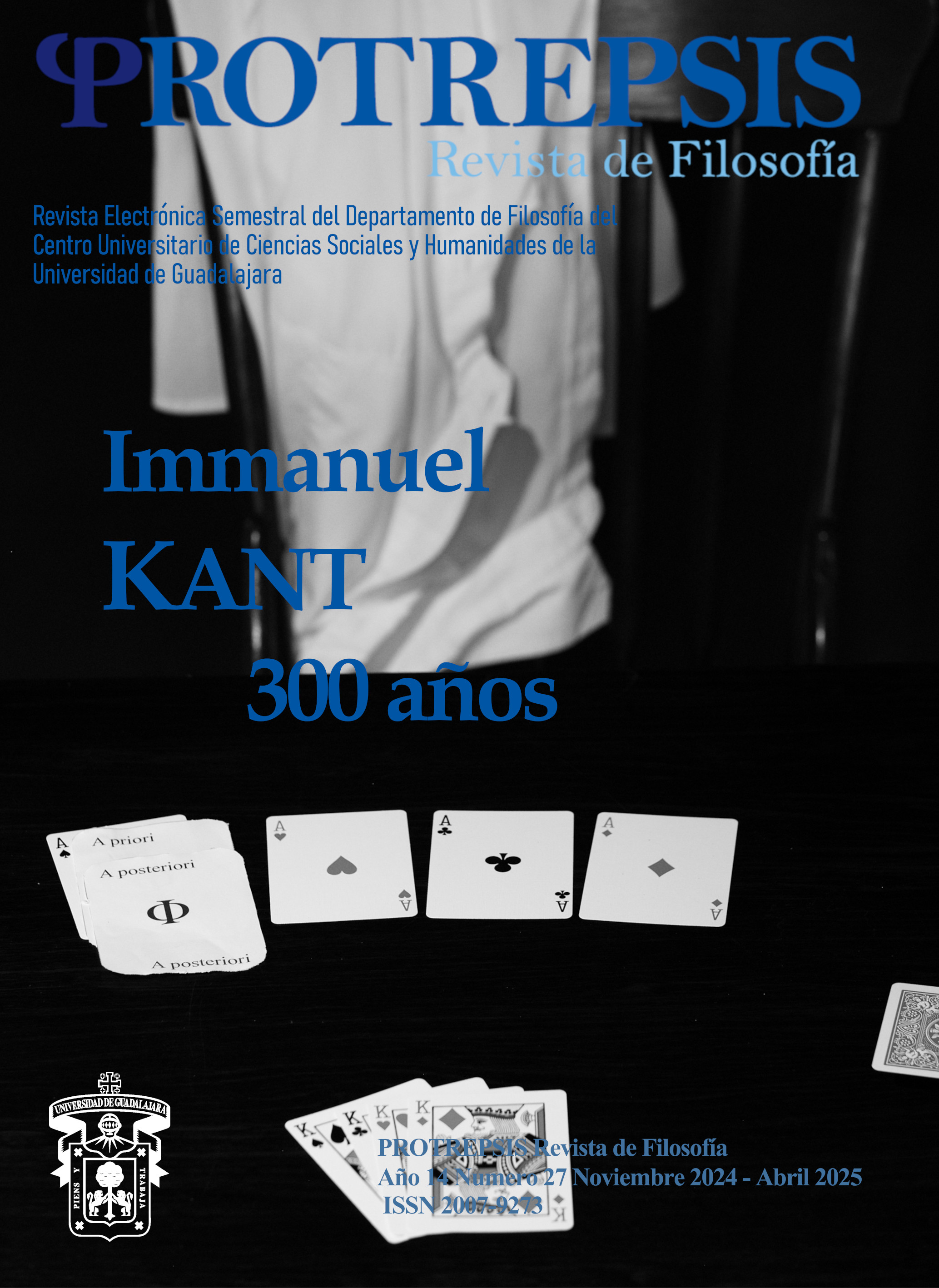
El Viraje kantiano
Resumen
En el presente artículo se discute el carácter íntimamente contradictorio, pero igualmente fértil, del aporte de Immanuel Kant. Se halla integrado por cuatro secciones: I) la recomposición de los saberes (retracción de la teología y empuje de las ciencias experimentales); II) la subordinación de la naturaleza a la libertad (lo cual delata una desconfianza fundamental respecto de lo inmediato); III) la redefinición de las tareas de la razón (donde se traslada de modo ostensible el pensamiento desde la ciencia hasta la ética); y IV) el desplazamiento que se verifica en Kant del ser al deber (lo que significa que se abandona gradualmente lo sensible para otorgarle toda la relevancia posible a lo suprasensible). En esta perspectiva general, el giro de Kant define magníficamente las principales aporías de la modernidad. Sobre Kant existe una bibliografía descomunal; en este artículo se aborda una serie de aspectos que constituyen su núcleo en lo relativo a su concepción acerca del mundo moderno, haciendo hincapié —lo cual sería su conclusión— en su carácter aporético.